| Tamas Lab | |
Research Group for Cortical Microcircuits of the Hungarian Academy of Sciences Department of Physiology, Anatomy and Neuroscience, University of Szeged |
Research Interest
Understanding of the elementary mechanisms underlying cortical information processing has long been one of the major challenges of neuroscience. Excitation and inhibition are the two major processes, which govern neuronal interactions in the brain. Recent advances in our knowledge indicated an astonishing variability and precision in efferent and afferent connections of inhibitory neurons, but the physiological significance of the distinct cell populations remained unclear. We set out to uncover the function of inhibitory cell types in neural microcircuits of the cerebral cortex.
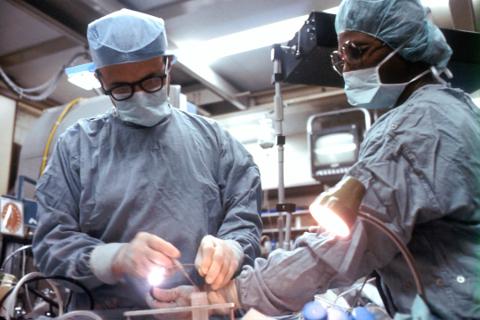
A major asset of our laboratory is the library of >5500 specimens of physiologically characterized connections of rat and human neocortical neuron pairs/triplets/quadruplets subsequently processed for correlated light and electron microscopy accumulated during the last 12 years. To our knowledge, this library of cortical circuits is unique in size and in consistency regarding the methods used for its generation, and it has proven the cutting edge in recognizing the properties of connections our work is based on. Moreover, advantages of multidisciplinary approaches have been widely recognized in neuroscience and we apply an arsenal of microarray, imaging, electrophysiology, light- and electron microscopic methods rarely combined within the same laboratory. Part of this is an unprecedented and still unique experimental analysis of human microcircuits using blocks of non-pathological human cerebral cortex which is normally removed to gain access to deeper brain areas for the surgical treatment of tumours.
Ongoing work in the laboratory is based on concepts emerging predominantly from our experiments. The key hypotheses aim to bridge the gap between the unitary action of single nerve cells and network events in the cortical microcircuit, but from a fundamentally different angle: neurogliaform cells (NGFCs) and chandelier or axo-axonic cells (AACs) seem to achieve their function through extreme forms of unspecificity and specificity in the cortical network, respectively. The idea that NGFCs operate by means of a unitary form of volume transmission (Oláh et al. Nature 461, 1278; Tamás et al. Science 299, 1902) goes beyond the classical theory which states that the dominant excitatory (glutamate) and inhibitory (GABA) neurotransmitters act in or around synaptic junctions between cortical neurons; instead, spatial unspecificity of neurotransmitter action would make the function of single NGFCs similar to the synchronized action of several GABAergic neurons belonging to the same class. Moreover, our experiments are aimed to fundamentally change the current views on the function of AACs and extend the roles generally attributed to cortical GABAergic neurons by showing that the most effective excitatory neurons of the cerebral cortex are not glutamatergic, but use the classical inhibitory transmitter GABA (Szabadics, Varga, Molnár et al. Science 311, 233). Furthermore, our pioneering analysis of the human cortical microcircuit is expected to identify features of the human microcircuit characteristic to our species (Molnár, Oláh et al. PLOS Biology 6, e222). Finally, a more general message of the expected results will broaden the strategies used in search for the function of particular neuron classes in the complex networks of the cerebral cortex by studying the network effects specially associated with a particular class of cell.